Content Marketing, SEO and Social Media: How They Work Together

Published:
February 2, 2024
Updated:
November 6, 2026
In May 2026, Google began showing previews of “perspectives from public online discussions, social media, and other firsthand sources” in its AI answers, with the creator’s name, handle or community attached (Google). Social and forum posts are among the sources AI search cites most. In Ahrefs’ November 2026 tracker of Google’s AI Mode in the US, Reddit accounted for 18.1% of citations among the top sources, YouTube 17.0%, Facebook 8.3% and Instagram 2.5% (Ahrefs).
That visibility is not guaranteed. Reddit told investors in October that its search referral traffic was “down meaningfully” in the third quarter, falling by more than a million referrals a week in October (Reddit), and Google has said Reddit “gets no special preference” in ranking (Search Engine Roundtable).
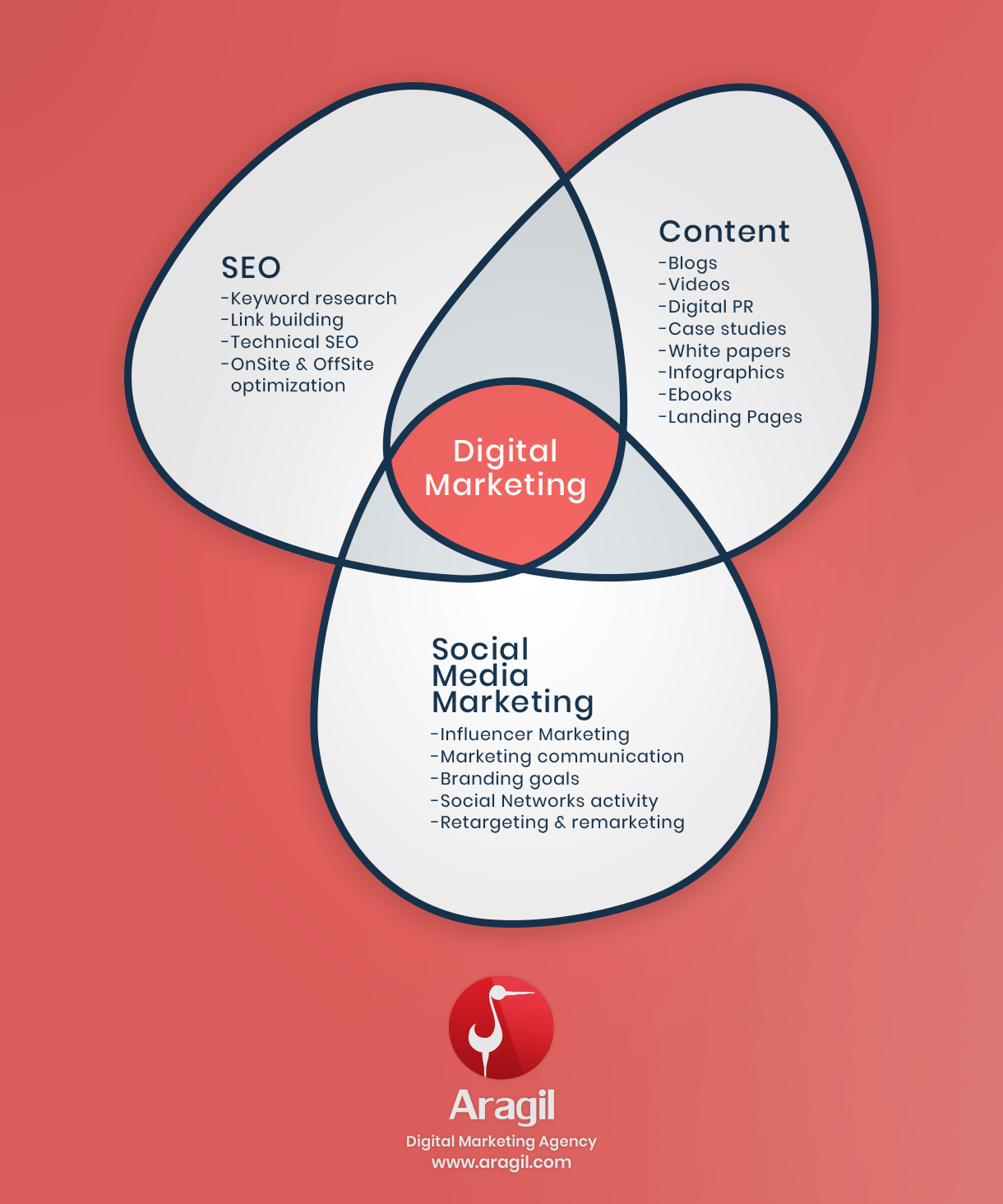
The lesson for brands is that search and social have become one discovery system that keeps shifting. A business that runs content, SEO and social as three separate jobs ends up writing three versions of the same idea, none of them strong enough to be found everywhere. Many teams already sense the gap. In the Content Marketing Institute’s 2025 B2B study, only 29% of marketers rated their content strategy very or extremely effective, and 40% named communicating across organizational silos as a challenge (CMI). This guide shows how to run the three as one plan.
How search and social discovery overlap
Google shows forum and social posts
Google’s “Discussions and forums” feature surfaces first-hand posts from forum-style sites, and Google provides markup for user-generated discussion pages, though not for articles written by a site’s own staff (Google). Since July 10, 2025, public posts from Instagram professional accounts belonging to adults have been open to search engines by default (PPC Land).
Young people search on several platforms
TikTok is one stop in a search habit, not a replacement for Google. In a small 2026 Adobe Express survey, 65% of Gen Z respondents had used TikTok to search, but the share more likely to rely on TikTok than Google fell from 8% in 2024 to 4% (Search Engine Journal). TikTok is also a news source: Pew found in October 2026 that 39% of US adults under 30 regularly get news there, down from 43% a year earlier (Pew). TikTok has shown ads in its search results since 2023, and since September 2024 has let US advertisers bid on search keywords (TechCrunch).
AI answers take clicks, but reward being cited
In Pew’s study of browsing data from March 2025, people clicked a regular search result on 8% of visits to pages with an AI summary, against 15% without one (Pew). Ahrefs found that an AI Overview correlates with a 58% lower click-through rate for the top-ranking page (Ahrefs). Being cited is linked to more clicks: across 53 brands, Seer Interactive found cited brands earned about 120% more organic clicks per impression than uncited ones, a correlation rather than proven cause (Seer Interactive).
Citations do not come only from page one. Ahrefs found in March 2026 that only about 38% of URLs cited in AI Overviews ranked in the top 10 for the original query, which Ahrefs attributes to the system drawing on related sub-queries (Ahrefs). Pages that answer each sub-question clearly have more ways to be found.
Social helps discovery, not rankings
Social activity does not directly raise a page’s Google ranking. Asked in 2015 whether social signals affect rankings, Google’s John Mueller said, “Not directly, no” (Search Engine Roundtable), and Google has said it does not use Analytics data for ranking (Search Engine Journal). The value of social is that people can find, quote and search for brands they see there.
The framework: one topic plan, three channels
- Start from the questions people ask. Pull them from search data, community threads, sales calls and support tickets. Group them into topics and tag each by intent: learning, comparing or buying.
- Build one cornerstone page per topic on your own site. Google’s guidance asks whether content shows “first-hand expertise and a depth of knowledge” and warns against “producing lots of content on many different topics in hopes that some of it might perform well” (Google). One strong page beats five thin ones.
- Plan distribution before production. Decide what each page becomes before writing it: short videos, a carousel, a LinkedIn post, a newsletter item, answers in communities where the question comes up. Write the page with those pieces in mind.
- Answer sub-questions clearly. Give each likely follow-up its own heading and a direct answer, so the page can be cited for related searches.
- Take part in communities honestly. On Reddit or industry forums, answer the question first and link only when it helps. Communities punish promotion, and Google gives no platform a guaranteed spot.
A worked example
Take an accounting software company whose customers keep asking how to close the books faster at month end. Run separately, the SEO team writes a keyword article, the social team posts generic tips, and the content team publishes an unrelated e-book. Run together, the plan looks like this:
- The page: a step-by-step month-end close guide with a downloadable checklist and a short section for each follow-up question, such as how long a close should take and what to automate first.
- Social: a one-minute video walking through the slowest step, a LinkedIn carousel of the checklist, and a short post sharing one customer’s before-and-after timeline.
- Communities: plain answers in accounting forums where the question comes up, linking to the checklist only where it helps.
- Email: the checklist as a lead magnet, followed by one tip a week for a month.
Every piece points back to the same topic, every comment feeds the next update, and the company measures one topic instead of four disconnected campaigns.
How a topic moves through the channels
- Week 1: publish the cornerstone page, link it from related pages on your site, and send it to your email list.
- Weeks 1 to 4: release native social versions on each platform rather than bare links, and answer the topic’s questions where people ask them.
- Months 2 to 6: add questions from comments and sales calls to the page, update facts, and turn the best-performing social pieces into new sections.
Search takes longest to pay off. In an older Ahrefs study, only 5.7% of new pages reached Google’s top 10 within a year, and most of those took two to six months (Ahrefs). Social and email carry a topic in its early weeks, and search keeps it working after that. Our social media strategy guide covers choosing platforms, and our post on SEO tracking covers the search side.
Common mistakes when the channels run apart
- Writing for keywords nobody discusses. If a topic never comes up in comments, communities or sales calls, it rarely earns links or shares either.
- Posting links instead of native content. A bare link asks people to leave the platform. A native video or carousel gives value where they are and makes them more likely to search for you later.
- Promoting in communities. Dropping links into forums gets posts removed and accounts banned. Answer the question first.
- Expecting social to lift rankings. It doesn’t directly. Judge social by reach, saves, brand searches and conversions.
- Reporting each channel to a different team. Separate reports hide which topics work everywhere.
How to measure content, SEO and social together
- GA4 channels. GA4’s default channel group separates Organic Search, Organic Social, Organic Video and a new AI Assistant channel. GA4 recognizes most social referrers on its own, but UTM tags with a standard medium such as “social” keep in-app clicks out of Direct (Google).
- Search Console. Clicks from AI Overviews and AI Mode still sit inside the “Web” search type (Google), but since August 2026 a generative AI report shows how often your pages appear in them, counting impressions only (PPC Land). A branded queries filter, rolling out since March 2026, shows whether more people search for your brand by name, one sign that social and PR are working (Search Engine Roundtable).
- Report by topic, not by channel. For each topic, track search clicks, social reach and saves, community mentions, newsletter clicks and conversions together, so you can see which topics earn attention everywhere.
Measurement is where most teams struggle. In the same CMI study (CMI), only 51% of B2B marketers said their organization measures content performance effectively, and 56% found it hard to attribute return on investment. Paid campaigns can extend the topics that work, as our guide to running ads online explains, and our posts on marketing trends and in-app advertising cover other channels. Our content, SEO and social media teams work from one plan.
Frequently Asked Questions
Does social media help SEO?
Not as a direct ranking factor. Google’s John Mueller has said social signals do not directly affect rankings, and Google does not use Analytics data to rank pages. Social helps discovery instead. Public Instagram posts from professional accounts can appear in search results, Google’s AI answers preview social and forum posts, and people who see a brand on social media can search for it by name later.
Is TikTok replacing Google for young people?
Not on current evidence. In a small 2026 Adobe Express survey, 65% of Gen Z respondents had used TikTok to search, but only 4% were more likely to rely on it than Google, down from 8% in 2024. Pew found that 39% of US adults under 30 regularly get news on TikTok. Young people search across several platforms, so plan each topic for search and for social video.
Do AI Overviews reduce clicks to websites?
Mostly, yes. Pew found people clicked a regular result on 8% of visits to pages with an AI summary, against 15% without one. Ahrefs found an AI Overview is linked with a 58% lower click-through rate for the top-ranking page. Being cited matters: Seer Interactive found cited brands earned about 120% more organic clicks per impression than uncited ones, though it notes this is a correlation.
How do you get cited in Google’s AI Overviews?
Google says there are no special requirements beyond normal SEO. In practice, citations often come from pages that rank for related sub-questions: Ahrefs found only about 38% of cited URLs rank in the top 10 for the original query. Cover each likely follow-up question clearly on your own site, and be present on the platforms AI search quotes most, such as Reddit, YouTube and Facebook.
How long does new content take to rank on Google?
Usually several months, and often much longer. In an older Ahrefs study, only 5.7% of new pages reached the top 10 within a year, and most of those took between about two and six months. That is why social media and email should carry a new topic in its first weeks, while the page builds links and search visibility over time.
How do you measure content, SEO and social together?
Report by topic rather than by channel. In GA4, use the default channel groups, which separate organic search, organic social, organic video and AI assistants, and tag social links with UTM parameters. In Search Console, use the branded queries filter and the newer generative AI report. Then compare search clicks, social engagement and conversions for each topic side by side.