What’s the Point of Fragrance Adverts? Decoding Perfume Ads

Published:
February 2, 2024
Updated:
September 24, 2026
The point of a fragrance advert is to make you recognize, want and ask for a bottle whose smell the advert cannot show you. Perfume is bought for what it means before what it smells like, and a great deal of it is bought as a gift by someone who will never wear it. So the advert sells the identity the scent stands for, says the name slowly enough for you to repeat it at a counter, ends on the bottle so you will know it on a shelf, and runs hardest in the weeks before Christmas, when the people buying gifts are making up their minds.
That is the whole answer. The rest of this piece explains why each of those things is true, and why the format that looks most absurd on television is one of the most precisely engineered in advertising.
An advert that cannot demonstrate its product
Almost every other kind of advertising can show you the thing. A car can be driven, a phone can be held, food can be eaten on screen and a detergent can be poured on a stain. Perfume has one property that matters, and it cannot pass through a screen.
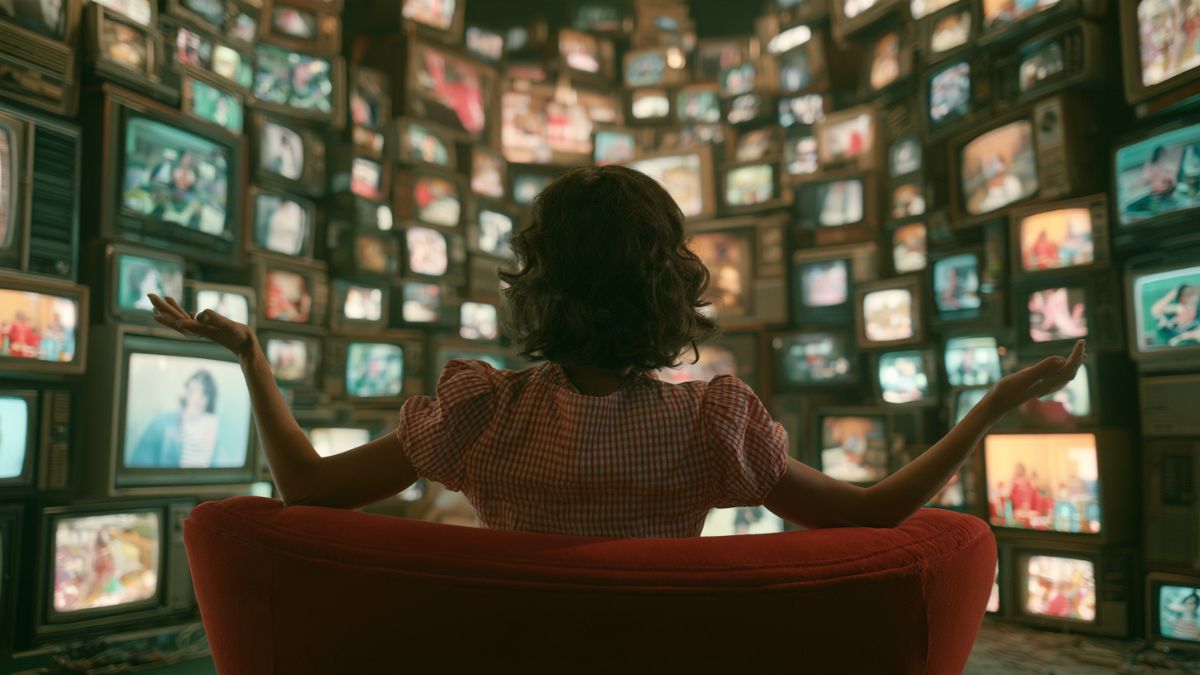
Faced with a product that cannot be demonstrated, fragrance advertising made a choice decades ago that still defines it: stop describing the product and describe the person you become when you wear it. The woman running through a city at night in an evening gown, the man walking out of a dark sea, the couple on a rooftop, the gold light, the slow motion. None of it is information about the smell. All of it is information about who the smell is for.
That is why fragrance adverts feel strange and abstract. They are not failing to explain the product. They have decided that explanation is impossible and that meaning is the only thing worth transmitting in thirty seconds. The abstraction is deliberate, because it leaves room for the viewer to project themselves into the scene, which is exactly what a product sold on identity needs.
Much of it is not aimed at the person who wears it
The second reason the adverts look the way they do is the buyer. A large share of fragrance is bought as a gift, and the gift-giver has a specific problem: they need to choose something personal for someone else, often in a hurry, often without being able to judge the scent themselves.
This is why the adverts cluster so heavily in the weeks before Christmas, and why viewers in December find themselves asking what the point of them is. The adverts are not really talking to the viewer as a wearer. They are talking to the viewer as a shopper about to stand at a counter, trying to remember which one looked right for their partner, their mother or their friend.
Seen that way, several odd conventions make immediate sense. The brand name is spoken slowly, sometimes in French, sometimes whispered, and often repeated at the end, because the viewer needs to be able to say it to a sales assistant. The final frame almost always holds on the bottle, because that is what the shopper will be scanning for on a crowded shelf. And the celebrity is chosen partly as a shorthand for the kind of person the gift is meant for, so the buyer can match a face to the recipient.
You are buying the fashion house at the only price you can afford
The third reason is who the adverts are really selling. Many designer fragrances are produced under license by large beauty companies rather than by the fashion houses whose names are on the bottle. The advert is therefore selling two things at once: the fragrance, and the fashion house itself.
For most people, a bottle of perfume is the most affordable way to own something from a luxury house whose clothes and handbags are out of reach. That is the real transaction, and it explains why fragrance adverts look like fashion films rather than product demonstrations. They are built to carry the whole world of the brand, the elegance and the exclusivity and the aspiration, in a format that ends with a product almost anyone can buy.
This also explains the production budgets. When an advert is the public face of an entire luxury brand, and runs during the most commercially important weeks of the year, it gets directors and stars that most categories would never justify. The 2004 Chanel No. 5 film with Nicole Kidman, directed by Baz Luhrmann, is the famous example: a short film treated as a cinematic event, which is exactly what the format is trying to be.
The grammar of a fragrance advert
Once you know what the advert is for, the individual choices read like a vocabulary, and the same few elements appear again and again.
The setting stands in for the smell. Because the scent cannot be shown, the environment carries its character. Water, sea spray and open sky suggest something fresh and clean. Night, candlelight, velvet and deep gold suggest something warm and heavy. Gardens and daylight suggest something floral. The viewer reads the scent family from the scenery without a word being spoken.
The celebrity is borrowed identity. A famous face does not tell you how the perfume smells. It tells you who wears it, and invites you to borrow a little of that person’s image. Long partnerships, such as Charlize Theron’s run with Dior’s J’adore, build the association over years until the face and the bottle become inseparable.
The palette matches the bottle. Color grading is chosen to echo the glass and the liquid, so that the whole advert quietly trains your eye to recognize the product. When you later see the bottle, it arrives already carrying the mood of the film.
Slow motion and music do the emotional work. Without dialogue explaining anything, rhythm and sound carry the feeling. A fragrance advert is closer to a music video than to a commercial, and often uses a well-known song precisely because it arrives with emotion already attached.
The last frame is for the shop. Whatever happens in the film, the final seconds are the bottle and the name. That frame is the functional heart of the advert, designed for the moment weeks later when someone stands at a counter trying to remember. Producing images that hold up at that level of polish, and a final frame built for recognition, is the part of the craft that motion design and animation are most often called on to get right.
Where the actual selling happens
A fragrance advert almost never closes the sale on its own. It gets the brand into the shortlist, and something else does the persuading.
Traditionally that something else is the counter: testers, sprays on paper strips, the sales assistant, and the moment the scent finally reaches the customer. Samples do the same job at a distance, which is why they appear in magazines, in online orders and in discovery sets that let people try several fragrances before committing to one. The advert makes someone willing to spray. The spray makes the sale.
More recently a new format has appeared that does something advertising never managed: it describes the smell in words. Fragrance creators on social platforms talk about notes, longevity, how a scent changes over a day, and which cheaper alternatives resemble which expensive ones. It is the first large-scale attempt to translate scent into language for people who cannot smell it, and it has changed how many people discover fragrance, particularly younger buyers who research before they spray. For brands, that shifts some of the work from the thirty-second film to content that explains the product in the audience’s own vocabulary, and it is why the most effective fragrance launches now pair the cinematic advert with creators who can describe what the film can only suggest.
The channels have shifted too. The big December adverts still run on television, but increasingly on streaming services and online video as well, where the same cinematic spot reaches the same gift-buying audience through a different screen.
What any brand can take from it
Few businesses sell a product that cannot be demonstrated at all, but many sell something whose most important quality is hard to show: trust, expertise, taste, reliability. Fragrance advertising is the most extreme case of that problem, which makes its solutions unusually clear.
When you cannot show the product, show who it is for. Meaning travels further than information when the information cannot be conveyed.
Know who actually buys. If the person paying is not the person using, speak to the payer’s problem, which is often choosing well for someone else.
Design for the moment of purchase, not the moment of viewing. The last frame, the pronounceable name and the recognizable pack exist for a decision that happens weeks later somewhere else.
And let the advert do only its job. The film builds the desire; the sample, the counter or the explanation closes the sale. Asking one format to do everything usually means it does nothing well. That clarity about what the brand stands for, and for whom, is the foundation of any serious brand identity, and fragrance houses have simply had longer than most to perfect it.
Frequently Asked Questions
What is the point of perfume adverts?
They exist to make you recognize and remember a fragrance you cannot smell through a screen. Because the scent cannot be shown, the advert sells the identity and mood associated with it, repeats the name so it can be asked for, and ends on the bottle so it can be found. Many are aimed at people buying gifts, which is why they appear so heavily before Christmas.
Why are perfume ads so weird?
Because they cannot demonstrate the product, they abandon explanation and focus entirely on atmosphere and identity. The abstraction is intentional: it lets viewers project themselves into the scene, and uses setting, color and music to suggest the character of a scent without describing it. What looks strange is a deliberate response to a product that cannot be shown.
Why are there so many perfume adverts at Christmas?
Fragrance is one of the most popular gifts, so the weeks before Christmas are the most commercially important of the year. The adverts are timed for gift-givers, who need to choose something personal for someone else, often quickly. Repeating the name and ending on the bottle help those shoppers find the right product at a counter or online.
Why do perfume ads use celebrities?
A celebrity signals who the fragrance is for and lets the viewer borrow some of that person’s image. Since the advert cannot convey the smell, a recognizable face becomes shorthand for the scent’s personality. Long-running partnerships strengthen the link over years, and for gift buyers the celebrity helps match a fragrance to the person they are buying for.
Do perfume adverts actually work?
They work at the job they are designed for, which is recognition and desire rather than immediate response. They make a fragrance familiar enough to be requested or recognized, and the sale is then closed by sampling, the counter or online reviews. Brands with every incentive to measure the effect keep investing in them season after season, which suggests the format continues to earn its place.