Virgin Active’s Slogan and Ads: Counter-Positioning in Fitness
Published:
October 14, 2025
Updated:
October 14, 2026
Virgin Active’s slogan is “Everything You Need Is Inside.” The line fronts a global campaign that launched in September 2026 for rollout across nine markets, made by the South African agency We Are Bizarre, and it heads the club chain’s UK homepage. Chief executive Dean Kowarski described Virgin Active’s “Social Wellness Club” idea as “a place that meets you where you are.”
It follows two years of advertising that picked a fight with the fitness industry. In September 2024 Virgin Active and the Amsterdam agency We Are Pi launched “Leave the Cult, Join the Club” on TV, online and outdoor in six countries, under a new positioning, “Where Wellness Gets Real.” The launch mocked “fakefluencers,” fad diets and supplements, and Virgin Active’s group creative director summed up the message with an expletive, Campaign Brief reported.
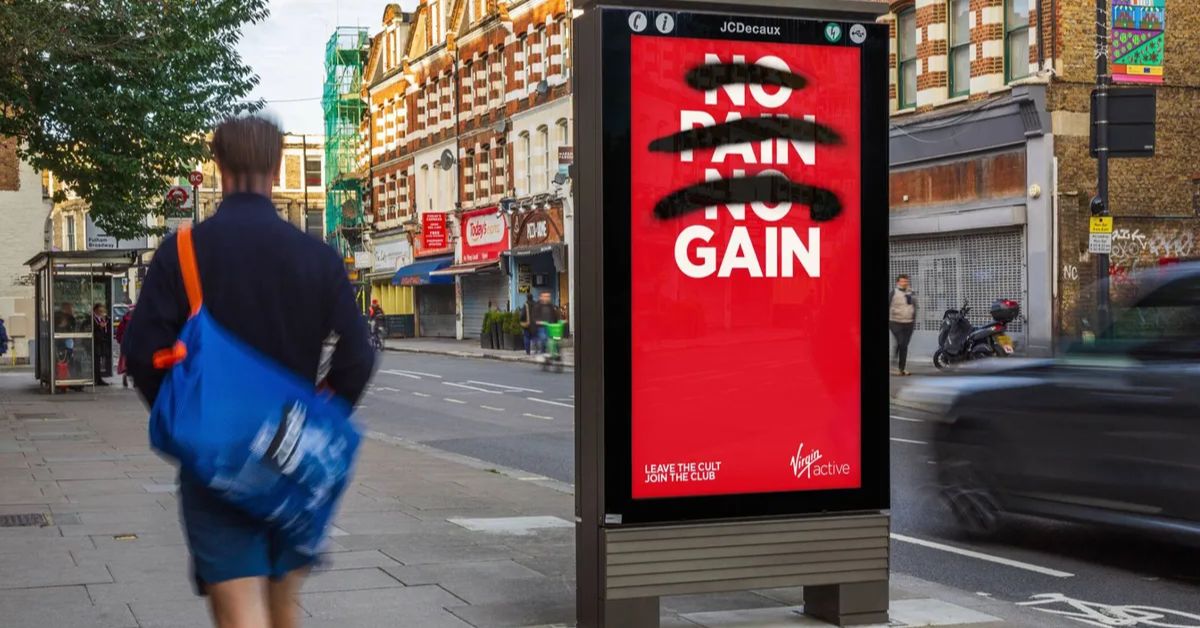
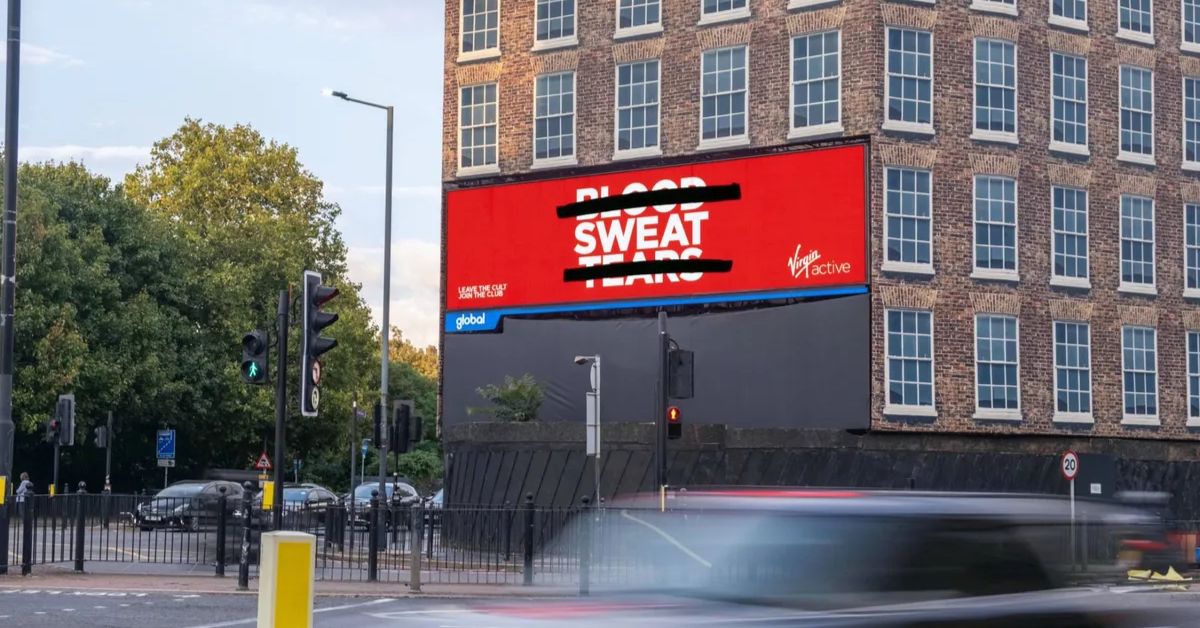
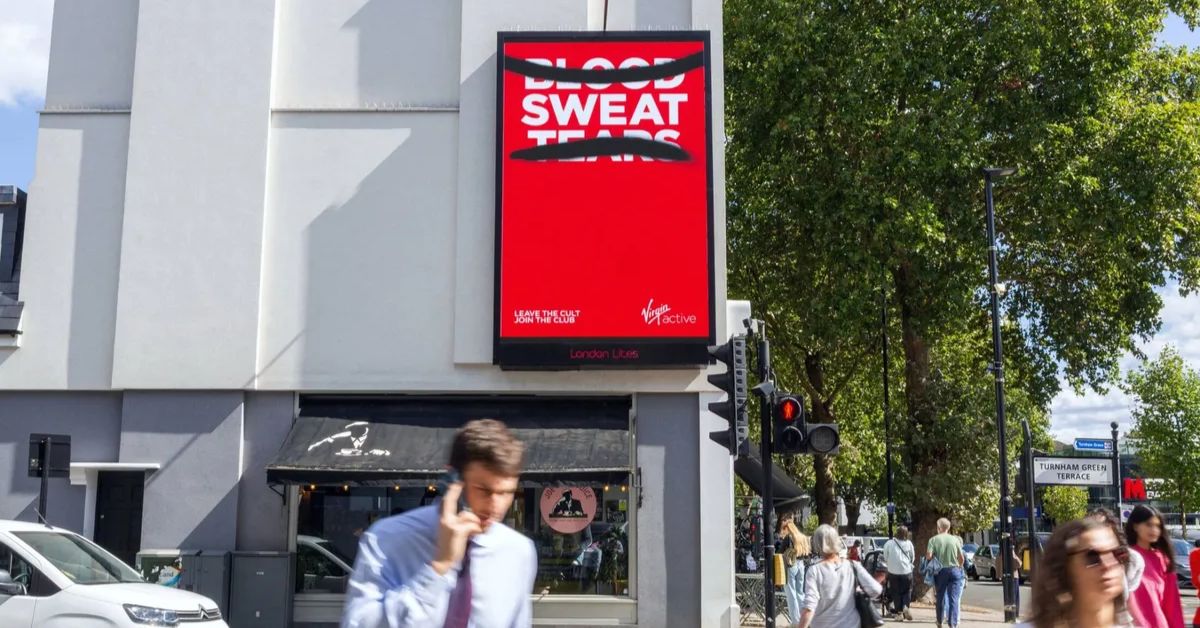
The second phase ran in October 2025, starting in the UK around World Mental Health Day and the Royal Parks Half Marathon in London, which Virgin Active sponsored. Messaging along the course flipped “Go Hard Or Go Home,” post-race billboards mocked “No Rest Days,” and Virgin Active ran a recovery zone for the race’s roughly 16,000 runners, LBB reported. Posters, digital screens and radio carried the same idea, and billboards turned “No Pain No Gain” into a message about the gain, Creative Bloq reported. Rick Chant, executive creative director at We Are Pi, gave the reasoning: “it’s madness that the loudest voices in fitness still sound like drill sergeants.”
Virgin Active has published no results for either phase. In 2024 its revenue rose to £576.3 million, its pre-tax loss narrowed to £78.1 million from £146.7 million, and adult membership grew 5% to more than one million, City AM reported. None of it tells you what the ads did.
Counter-positioning works by speaking against your category’s tone
Fitness advertising has long sounded like a coach shouting at you: sweat, pain, before and after. Those are category codes, the signals that say “gym ad” before anyone reads the name, and our guide to brand codes versus category codes explains why ads built on them tend to help the market leader. Counter-positioning means naming that default tone and speaking against it on purpose. In strategy writing the term means a business model incumbents can’t copy without hurting themselves. Tone is easier to copy, so a brand has to hold it for years to own it.
It works for two reasons. An ad that breaks the category’s tone gets noticed, because it doesn’t look like the ads around it. And it reaches the people the default tone pushes away, such as anyone who finds gyms intimidating. Sport England launched “This Girl Can” in 2015 with ordinary women exercising, and reported that 2.8 million women aged 14 to 40 who recognized the campaign said they had done some or more activity as a result, according to its own survey data. Planet Fitness built a chain on its “Judgement Free Zone” and reported about 21.5 million members at the end of June 2026.
The default tone carries its own risk. Peloton’s 2019 “The Gift That Gives Back,” in which a woman documents a year on the exercise bike her husband gave her, played the category’s self-improvement pressure straight. After the backlash, its shares fell more than 9% on 3 December 2019, wiping out nearly $942 million of market value.
Virgin Active had tried a gentler version before. Its New Year campaign “Enough,” which launched in the UK on 26 December 2018, told people that doing the recommended amount of weekly exercise was enough. The 2024 launch was louder and ruder, and the 2025 posters used, in Chant’s words, “humour instead of pressure.”
When counter-positioning backfires
The first risk is repeating the message you are fighting. A poster that prints “No Pain No Gain” in large type, even to mock it, puts the phrase in front of everyone who walks past, and some will read only the slogan. Parody works when the twist is visible at a glance.
The second is sounding exclusive when you meant to sound principled. Equinox closed sign-ups on 1 January 2023 under the banner “We Don’t Speak January,” and critics accused it of gatekeeping fitness. Equinox deleted the TikTok video but kept the campaign.

The third is a tone your own record contradicts. In South Africa, Virgin Active once told people to “get off your ass” in an ad the advertising regulator cleared of complaints in 2016. A brand that mocks drill sergeants has to keep its own copy, staff and social posts from sounding like one.
In some markets a regulator also watches the default tone. Since June 2019 the UK advertising code has banned gender stereotypes likely to cause harm, and the guidance warns against suggesting happiness depends on “conforming to an idealised gender-stereotypical body shape.” Protein World’s 2015 “Are you beach body ready?” poster was barred from appearing again in its original form over its health and weight-loss claims, though the ASA later ruled the image itself was not irresponsible.
How to pick a fight with your category and keep your customers
Aim the joke at the category’s tone and leave its customers alone. Virgin Active’s ads went after slogans, fads and “fakefluencers” rather than the people who enjoy a hard workout. Then give people something to join. A campaign that only attacks leaves the viewer knowing what you are against and unsure what you offer. The 2026 line drops the opponent and describes the club.
Check that the product backs the claim. A gym that promises kindness and then hard-sells memberships at the front desk loses the argument on the first visit. Test the parody with people outside marketing to see whether they read the joke or only the slogan. And keep your own brand codes on every execution, so the attention goes to your brand rather than the category. Perfume brands work on a version of this problem, selling an identity the product can’t show, as our look at what fragrance ads are for explains. McDonald’s Sweden went further, with posters near nightclubs that carried no printed logo, only club lights shaped like the Golden Arches.
If you are weighing this for your own brand, settle the brand strategy before anyone writes a headline, then plan the content that will carry the same voice between campaigns, on social media and at the front desk.
Frequently Asked Questions
What is Virgin Active’s slogan?
Virgin Active’s line is “Everything You Need Is Inside,” launched in September 2026 in a global campaign across nine markets by the agency We Are Bizarre. Before that, the brand positioned itself as “Where Wellness Gets Real,” announced in September 2024, and ran the campaign line “Leave the Cult, Join the Club,” created by We Are Pi. An older line from 2013, by Karmarama, was “Don’t just live, live happily ever active.”
Who handles Virgin Active’s advertising and media?
The agency varies by campaign and market. We Are Pi in Amsterdam won the account in 2024 and made “Leave the Cult, Join the Club.” We Are Bizarre in South Africa made the September 2026 global campaign, and the agency MONTOYA made a January 2026 campaign in Australia, where Connected Media was named lead media agency in November 2025. Press questions go to Virgin Active itself, because the Virgin Group’s media center covers group news.
What was the Leave the Cult, Join the Club campaign?
It was Virgin Active’s campaign against what it called fake wellness. The first phase, in September 2024, ran on TV, online and outdoor in the UK, Italy, South Africa, Thailand, Singapore and Australia, mocking fitness influencers, fad diets and supplements. The second phase, in October 2025, started in the UK around World Mental Health Day and the Royal Parks Half Marathon, rewriting mantras such as “No Rest Days” and “No Pain No Gain.”
What is counter-positioning in advertising?
Counter-positioning means defining your brand against the default tone or promise of its category. In fitness, where ads have long relied on pressure, pain and perfect bodies, that means campaigns built on kindness, humor or a judgment-free welcome. It gets attention because it looks different from rival ads, and it reaches people the default puts off. It backfires when the parody repeats the slogan it mocks, sounds exclusive, or contradicts what customers experience.
Has Virgin Active published results for its campaigns?
Not for “Leave the Cult, Join the Club.” Virgin Active reported 2024 revenue of £576.3 million and a pre-tax loss of £78.1 million, down from £146.7 million, with adult membership above one million and back above pre-pandemic levels. Brait, its controlling shareholder, later credited an above-budget UK sales increase to the club refurbishment program. Neither figure isolates the effect of the advertising, and no awards for the campaign have been reported.